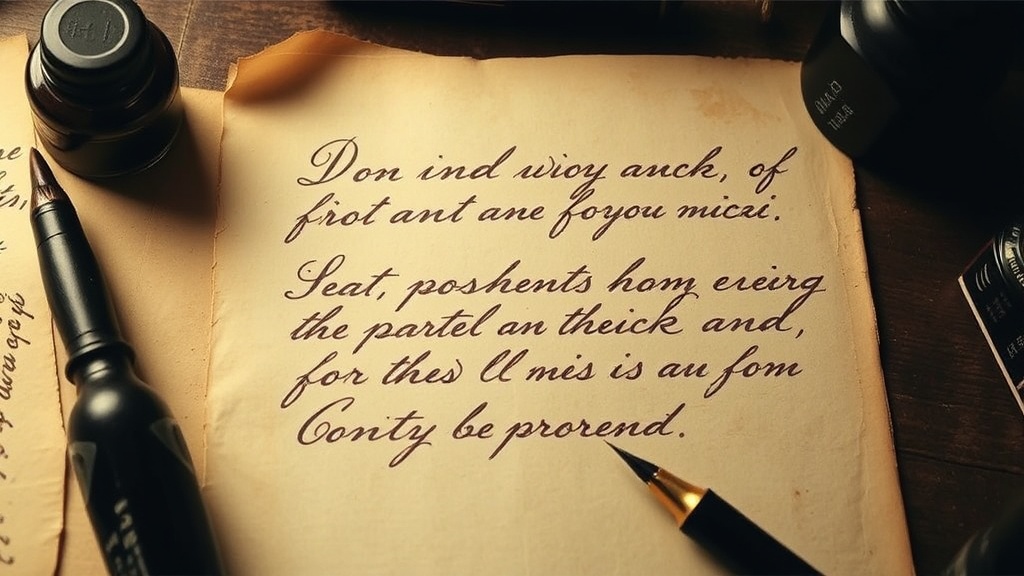
Rare Ink Varieties Found in Historical Autographs

The Permanence of Iron Gall Ink
The Warmth of Sepia and Natural Pigments
The Evolution of Modern Fountain Pen Inks
A single drop of iron-gall ink sits heavy on a piece of parchment, its deep, brownish-black hue biting into the fibers of the page. It doesn't sit on the surface like modern ballpoint ink; it becomes part of the paper itself. Understanding the chemistry of these historical pigments is the difference between a collector who simply buys a name and a collector who understands the physical reality of a piece of history. This post examines the specific varieties of historical inks—from iron gall to early synthetic dyes—and why their chemical makeup determines both the authenticity and the long-term preservation of an autograph.
What are the most common types of historical ink?
Historical ink varieties are primarily categorized by their base ingredients, such as iron salts, soot, or vegetable dyes. Before the mid-19th century, most significant autographs were written using iron gall ink, a substance made from iron salts and tannic acids found in oak galls. This ink is famous for its ability to bite into paper, creating a permanent, slightly acidic mark that actually strengthens over centuries as it oxidizes.
Aside from iron gall, collectors often encounter several other distinct varieties:
- Carbon/Lampblack Ink: Made from soot or lampblack, this ink is chemically inert. It doesn't fade easily, but it lacks the "bite" of iron gall and can sometimes sit on top of the paper fibers.
- Iron Gall Ink: The standard for much of Western history. It starts dark but often turns a deep brown over time due to oxidation.
- Sepia Ink: Derived from the ink sacs of cuttlefish, this was a common organic option in the 18th and 19th centuries. It offers a softer, more translucent appearance compared to the harshness of iron gall.
- Indigo/Vegetable Dyes: These were often used in non-Western traditions or for specific decorative flourishes, though they are far more prone to fading when exposed to light.
If you are looking at a 17th-century document, you aren't just looking at a signature; you're looking at a chemical reaction in progress. If that ink looks too "perfectly" black or lacks any slight brownish tint, you might be looking at a modern reproduction or a later addition. It's a subtle distinction, but one that matters when verifying a high-value item.
How does ink chemistry affect paper preservation?
The acidity of the ink directly impacts the longevity of the paper substrate through a process called ink gall corrosion. Because iron gall ink is inherently acidic, it can actually eat through the paper if the chemical balance is off. This is a major concern for collectors of signed first editions or early manuscripts.
When the iron content is too high, the ink becomes highly corrosive. You might see "haloes" around the letters or, in extreme cases, the ink literally falling out of the page, leaving a void where the signature used to be. This is why understanding keeping humidity in check for paper collections is so vital. Moisture in the air can accelerate these chemical reactions, making the ink even more aggressive toward the delicate fibers.
It's worth noting that carbon-based inks are much safer in this regard. Since carbon is chemically stable, it won't cause the same level of degradation. However, most historical-looking documents use the more volatile iron-based varieties. If you see a signature that appears to be "sunken" into the page or shows signs of brittle edges, you are likely seeing the effects of acid migration.
| Ink Type | Primary Ingredient | Longevity Profile | Visual Characteristic |
|---|---|---|---|
| Iron Gall | Iron Salts & Tannins | Moderate (Risk of Corrosion) | Deep Brown/Black |
| Carbon | Soot/Lampblack | High (Chemically Inert) | Matte Black |
| Sepia | Cuttlefish Ink | Variable (Light Sensitive) | Translucent Brown |
| Synthetic | Chemical Dyes | Low (Fades Quickly) | Vibrant/Uniform |
Can you identify a fake by the ink alone?
While ink chemistry isn't a foolproof method for a non-scientist, certain visual cues can suggest a signature is a later addition or a forgery. A common tactic in forgery is using a modern ink that lacks the characteristic oxidation of historical pigments. If a signature on an 18th-century document looks jet-black and sits perfectly on the surface without any sign of "bleeding" or integration into the paper, it's a red flag.
The way the ink interacts with the paper tells a story. For example, modern ballpoint pens leave a specific indentation and a uniform, oily ink trail. In contrast, a quill-written signature will show variations in ink flow—thicker at the start of a stroke and thinner toward the end. This is why spotting the machine or the nuances of a hand-drawn stroke is a vital skill. A machine-made signature or a stamp will lack the organic, erratic-but-consistent flow of a human hand using a dip pen.
Watch for these three things when examining historical ink:
- Oxidation: Does the ink show the expected color shift (e.g., black turning to brown)?
- Pen Nib Marks: Are there microscopic variations in the width of the lines caused by a quill or dip pen?
- Absorption: Has the ink actually stained the fibers, or does it look like it's just sitting on top?
If the ink looks too uniform, it's suspicious. History is messy. A person writing a letter in 1750 wasn't using a precision-engineered tool. Their ink flow would have been subject to the weight of the ink in the well, the texture of the parchment, and the pressure of the hand. Any signature that looks "too perfect" or "too consistent" often warrants a second look.
One thing to keep in mind: even a genuine signature can be damaged by poor storage. If you've purchased a piece with an iron gall signature, you must be vigilant. Sunlight and high humidity aren't just bad for the paper; they are catalysts for the ink's decay. You'll want to ensure your display environment is stable to prevent the ink from becoming a destructive force.
The chemical composition of an autograph is more than just a detail for a catalog. It is a physical record of the era in which it was created. Whether you're looking at a simple letter or a high-value manuscript, the ink is the soul of the document. Treat it as a living, reacting substance, and you'll preserve the history much more effectively.