Spotting the Machine: A Real-World Check for Autopens and Stampings

You're standing in a cramped shop in the ByWard Market, squinting at a copy of a 1990s memoir. The signature on the title page looks crisp—maybe too crisp. Identifying a mechanical signature isn't just about saving money; it's about preserving the integrity of your collection and making sure you aren't paying a premium for a machine's work. This guide covers the physical markers of autopens, printed facsimiles, and rubber stamps so you don't get burned by a find that seems too good to be true.
Collecting signed books in Ottawa (or anywhere else) requires a healthy dose of skepticism. When you see a signature that looks identical to three other copies you've seen online, your alarm bells should start ringing. The market is flooded with books that look 'hand-signed' but are actually the product of a mechanical arm or a high-resolution printer. If you want to build a collection that actually holds value, you need to learn how to read the ink, not just the name.
What does a mechanical autopen signature actually look like?
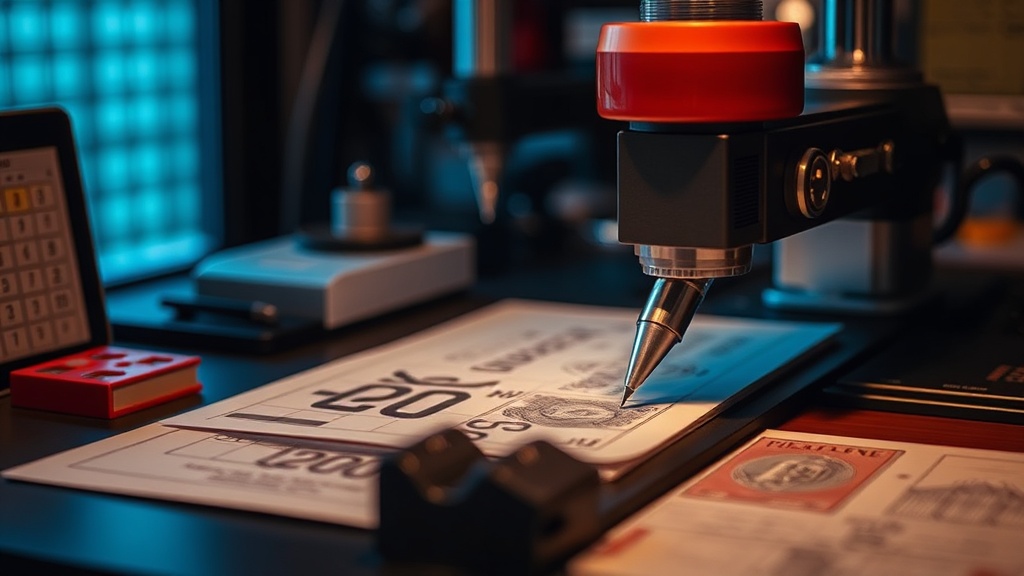
The autopen is a device that uses a mechanical arm to move a real pen across a page, following a pre-recorded template. Because it uses a real pen, it leaves real ink on the paper, which can fool even seasoned collectors who are looking for the sheen of wet ink. However, machines don't have the micro-variations of a human hand. They don't get tired, they don't sneeze, and they don't have a 'bad day' with their cursive. They move at a constant speed, which is a massive red flag.
When a human signs a book, the speed of the pen changes. We slow down at the start of a letter, speed up on the straightaways, and lift the pen with a slight 'tail' at the end. A machine moves with a terrifyingly consistent velocity. This results in what collectors call 'ink blobs' at the start and end of every stroke. Since the pen stays in one spot for a fraction of a second while the machine engages and disengages, more ink pools at those points. If you see perfectly circular dots of ink at the beginning and end of a signature, you're likely looking at an autopen.
The Mechanical Stutter
Another giveaway is the 'stutter' or 'vibration' in the line. Some older autopen machines had a slight mechanical shake. If you look through a magnifying glass (I always carry a small 10x loop in my pocket when I'm hunting in the Glebe), you might see a jagged, serrated edge to the ink line. A human hand might be shaky, but it doesn't shake with the rhythmic, jagged precision of a gear-driven arm. Besides, a machine-signed name often lacks the 'pressure depth' of a human hand. If you flip the page and don't see any indentation on the reverse, the pen might have been held with the light, uniform pressure that only a machine can maintain.
| Feature | Hand-Signed | Autopen / Mechanical |
|---|---|---|
| Pressure | Varies; deep on downstrokes, light on upstrokes. | Uniform; no variation in depth. |
| Ink Distribution | Natural pooling; thinner at high speed. | Blobs at start and stop points. |
| Speed | Dynamic; faster on loops and tails. | Constant; looks 'robotic' and flat. |
| Duplicates | No two are exactly alike. | Every copy is a perfect overlay. |
Why do publishers use facsimile signatures in modern first editions?
Publishers aren't necessarily trying to scam you, though it can feel that way if you aren't paying attention. Many 'Special Editions' or 'Collector's Editions' are released with a facsimile signature—a signature that is printed directly onto the page during the initial book production. These are usually mentioned in the fine print on the copyright page, but if you're buying a used copy without the original marketing materials, you might miss it. These books are common in big-box retail environments where an author couldn't possibly sign 50,000 copies by hand.
A facsimile signature is easy to spot once you know what to look for. Because it's printed, the 'ink' is actually just toner or ink-jet spray. It will be perfectly flat against the paper. If you tilt the page toward a light source (the 'tilt test'), a real signature will have a different sheen than the paper. The ink will catch the light, showing a slight gloss or a change in texture. A printed signature will look exactly like the surrounding text. It's part of the page, not sitting on top of it. You can learn more about the ethics of these editions at the